



焦点
Game Designer, Computer Game Designer, Game/Simulation Designer
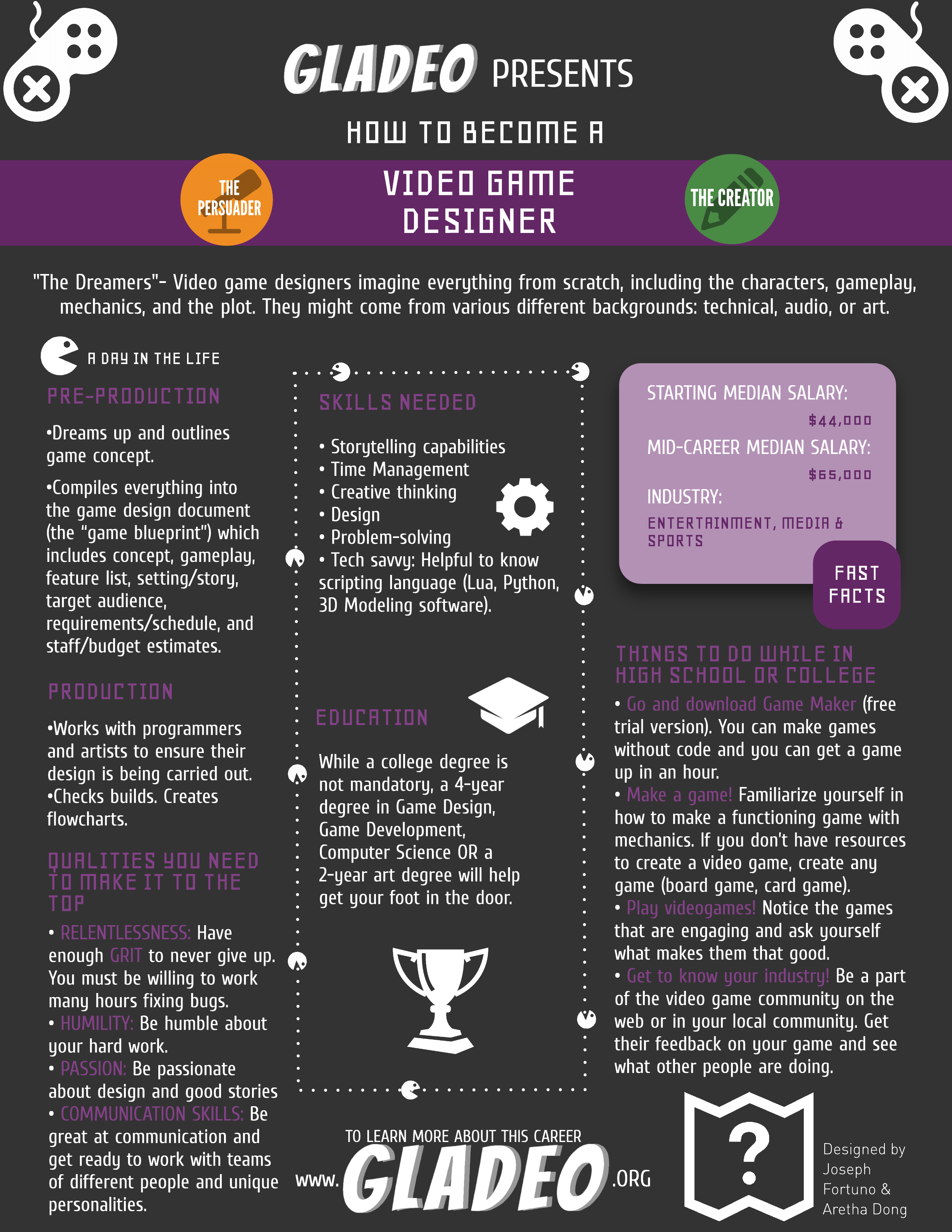
"The Dreamers" Video game designers imagine everything from scratch, including the characters, gameplay, mechanics, and the plot. They might come from various different backgrounds: technical, audio, or art.
AI can assist in generating game assets, environments, and even story elements, speeding up development. However, designing compelling gameplay, balancing mechanics, and crafting immersive player experiences require human creativity and vision. Game designers who use AI as a creative accelerator will have an advantage.
- Getting to make games!
- Being part of a dynamic, passionate community of game makers.
- Fun!
- Pre-production: Dreams up and outlines game concept. Compiles everything into the game design document (the “game blueprint”) which includes concept, gameplay, feature list, setting/story, target audience, requirements/schedule, and staff/budget estimates.
- Production: Works with programmers and artists to ensure their design is being carried out. Checksbuilds. Creates flowcharts.
- Storytelling capabilities
- 时间管理
- Creative Thinking
- 设计
- 解决问题
- Tech savvy: Helpful to know scripting language (Lua, Python, 3D Modeling software).
- Lead Designer: Main visionary of the game. Compiles the team’s ideas into the game design document. Manages schedules and tasks. Usually technically and artistically adept.
- Content Designer: Develops the game’s plot and characters.
- Game Mechanic Designer: Works on specific piece of gameplay. Work depends on the genre of game.
- Level Designer: Creates the environment of the game, objects and inhabiting characters within the environment.
- Writer: Creates text and dialogue.
Studio
- Works for a larger company, usually with a larger team of designers.
- Pros: Usually more financial stability, potential to work on larger projects.
- Cons: Will most likely work on things the company wants you to work on. Long hours to meet deadlines.
独立的
- Works with a team to create your own game. High risk, high reward.
- Pros: Works with a team on your terms, on your time. Gets to create your own game.
- Cons: Less resources, more risk, and must wear many hats (marketing, distribution, quality assurance…etc.).
- Independent side is growing due to lower barriers to entry because of affordable software and easy distribution; in turn, there is more competition.
- Console is changing. Mobile games increasing. Especially with the iPad.
- Played games: board games, card games, videogames…etc.
- Loved drawing and thinking up ideas, stories, different worlds,
- Loved animation and making comics.
- Made games: board games, card games, videogames…etc.
- On average, Video Game Designers hold college degrees, such as a bachelor’s in game design, simulation and visualization, game art, game development, graphic design, multimedia design, or computer science. Some top designers earn a master’s
- While a formal educational background is often preferred, designers occasionally break-in by demonstrating proficiency and work experience in coding and other related skills
- Some schools feature bootcamps and ad hoc game design courses (like those offered by Vertex School) that students can take, such as game art and animation, programming languages, visual effects, 2D animation, 3D modeling, and concept art
- Project management and teamwork skills are also essential
- There are different types of games, such as console games, mobile games, computer games, and massively multiplayer online games, each of which may require different skills
- Most designers gain additional knowledge and skills through Video Game Designer internship On-the-Job training
- Practice your skills early with easy, no-coding programs like GameMaker
- Consider designing a few games without the use of a computer
- Play a variety of videogames and take notes on which aspects you find most (and least) engaging
- Talk about gaming with friends and other players in the community, both online and in-person
- Remember to have conversations outside of online forums, because in-person dynamics can generate different thoughts and ideas!
- Work on an online portfolio showcasing your best work, and keep it updated as you get better
- Sites such as Coroflot, Carbonmade, and Behance are good for building free portfolios
- Sign up for programming language courses or study them on your own. Common languages for game development include C++, C#, JavaScript, Java, Lua, and Python
- Even if you have or are working on a college degree, you can sign up for edX or Coursera courses if you need extra focus on topics such as object-oriented programming and algorithms, or with using video game engines like Unity and Unreal
- Read lots of books and blogs, watch YouTube tutorials, and join school organizations related to the field
- Start publishing your games on sites like Itch.io, IndieGameStand, Desura, Kongregate, and Roast My Game! You’ll get plenty of feedback and be able to refine and update your game
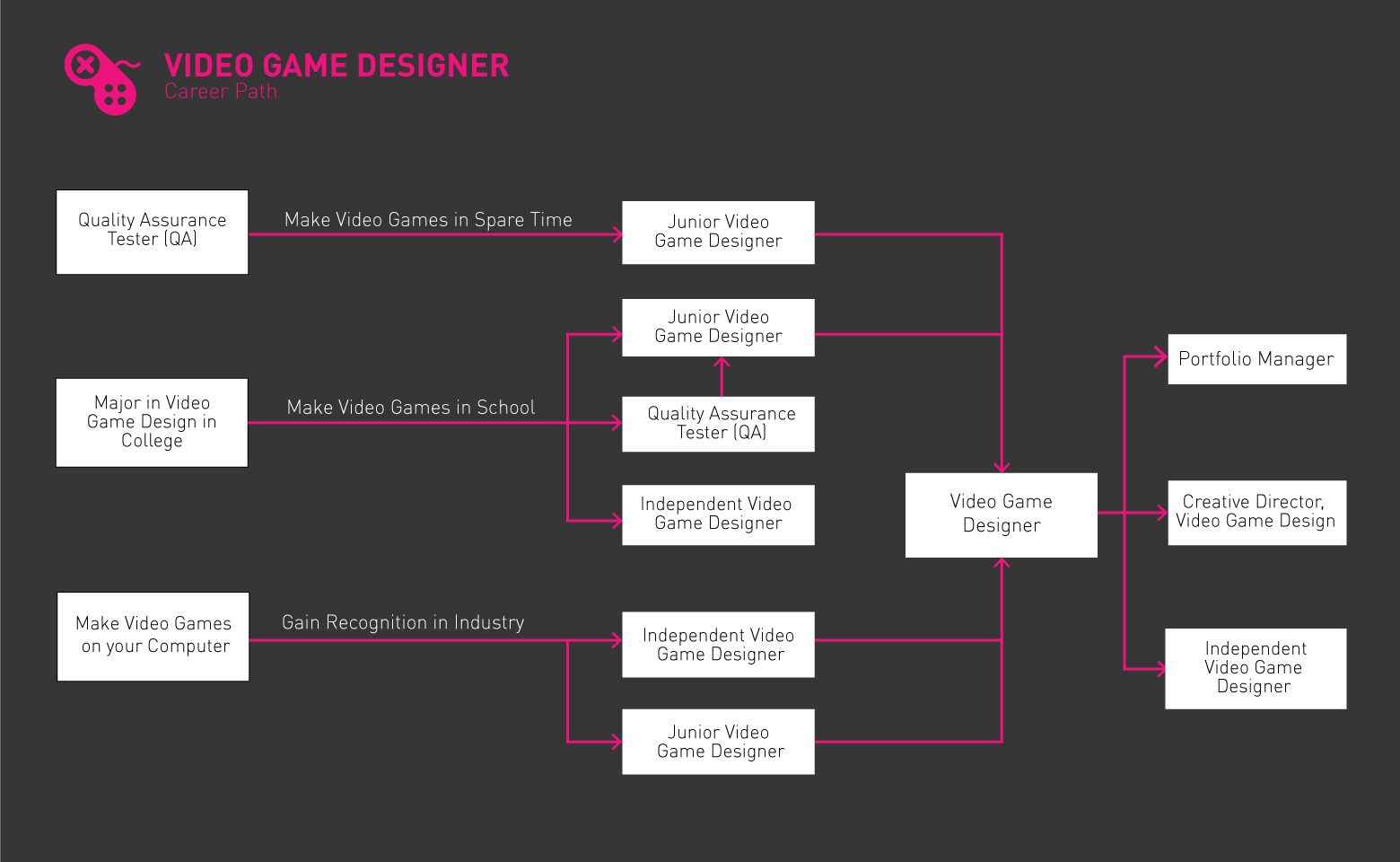
- Major in video game design and develop your portfolio: When you apply, you can come in as a junior video game designer if you have made games on your own.
- Put your games out there: Test it on websites like gamejams.com or tigsource.com. You can get feedback from the users. See if you are any good and people like your game.
- Let your network know you are looking for work and share your online portfolio! Be sure to include any games you may have created and launched on your own
- Be persistent as you search for opportunities on Glassdoor, Indeed, ZipRecruiter, LinkedIn, and other job portals. Don’t forget to search for Video Game Designer internships
- Visit the websites of popular video game companies to see if they have opportunities listed
- Interview a working Video Game Designer and ask for tips on breaking into the career field
- 请你的教授、导师和同行担任你的推荐人
- Check out your school’s career center to get help polishing your resume and interview skills
- If attending a game-related college program, ask the program department about recruiter connections. They might be a pipeline to employers looking to recruit talented grads
- Relentless: Those who have enough grit to not give up. Willing to keep working to fix bugs.
- 毅力
- Humility
- Passion for design
- Passion for good stories
- Great communication skills and ability to work with a team of people
- Shares a similar philosophy to you.
- Somebody that is doing what you want to be doing and is excited about what they are doing.
Community
网站
- 148apps
- 8 Bit Horse
- AI GameDev
- Amit’s Game Programming Information
- Black Golem
- Brainy Gamer
- Chris Hecker
- Codecademy
- Coursera
- Edge | Games Radar+
- edX
- GameDev.net
- 游戏开发者
- 游戏开发者大会
- GameJobs
- GamePolitics
- GameSpot
- GamaSutra
- Game Tutorials
- Ian Bogost
- IGDA
- Indie Games
- No Twinkie Database
- Pixel Prospector
- Pocket Gamer
- Sirlin.net
- Social Games Observer
- TechCrunch
- The Koalition
- TIGForums
- What Games Are
- Y Combinator
书籍
- The Gamer’s Brain, by Celia Hodent
- The Ultimate Guide to Video Game Writing and Design, by Flint Dille and John Zuur Platten
- The Art of Game Design: A Book of Lenses, by Jesse Schell
- Key transferable skills: Storytelling capabilities, design skills, (maybe) knowledge of programming languages.
- Alternate Careers: Game maker for board games, TV shows, and theme parks; computer programmer; UX designer.
新闻动态
精选职位
在线课程与工具
预期年薪
新员工的起薪约为6.9万美元。年薪中位数为10.6万美元。经验丰富的员工年薪可达16.2万美元左右。
预期年薪
新入职员工的起薪约为14.1万美元。年薪中位数为17.8万美元。经验丰富的员工年薪可达21.3万美元左右。
预期年薪
新员工的起薪约为5万美元。年薪中位数为8.5万美元。经验丰富的员工年薪可达12.3万美元左右。
预期年薪
新员工的起薪约为6.8万美元。年薪中位数为10.3万美元。经验丰富的员工年薪可达13.2万美元左右。
预期年薪
新入职员工的起薪约为5.8万美元。年薪中位数为8.9万美元。经验丰富的员工年薪可达12.1万美元左右。